


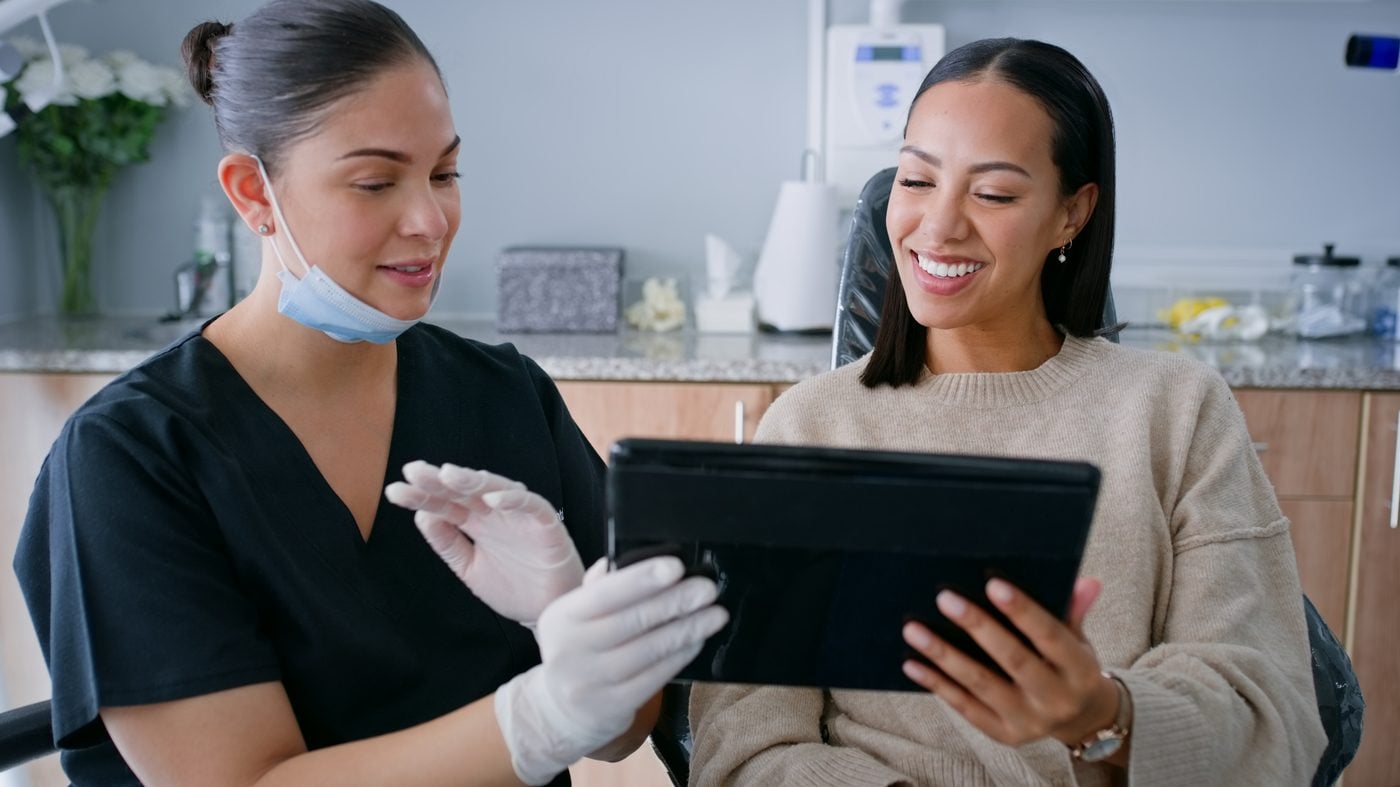
Most patients who sit down for an orthodontic consult already want treatment. But many of them leave without starting, and the financial presentation is often where they get lost.
With fewer new patients coming through the door in today’s market, every consult counts more than ever.
Winning those patients isn’t about having the lowest fees or the biggest discounts. Practices like LevelUp Orthodontics have raised their fees and their case acceptance at the same time. What’s changed is the question patients are asking. As OrthoFi Co-Founder and CEO Dave Ternan puts it, “the new question that they’re really focused on is, ‘Can I afford the monthly payment?’”
A financial presentation that answers that question clearly, and gives patients a payment plan that fits their budget, can set your practice apart from the one down the street.
Here are seven changes practices can make to their financial presentation to offer a better patient experience, improve Treatment Coordinator performance, and ultimately turn more consults into starts.
1. Verify Insurance and Collect Patient Forms Before the Exam
In many practices, the treatment coordinator is expected to verify insurance, estimate benefits, explain the treatment plan, and build payment options all within a single appointment. When that work happens on the fly, TCs end up presenting numbers they haven’t had time to confirm, and patients can sense the uncertainty.
High-converting practices move that work ahead of the consult. Patients complete their intake forms before the appointment, and insurance eligibility is checked before they arrive. The TC walks into the room with an accurate estimate and can present it with confidence, and patients aren’t surprised later by a different number. Across OrthoFi practices, 94% of eligibility checks are delivered before the exam, and more than 80% of patients complete their forms early.
2. Show Insurance, Total Cost, and Payment Options in One View
Patients are already taking in a lot during a consult, from the clinical findings to the treatment timeline. Asking them to piece together their insurance estimate, total fee, and payment terms from a printout and a verbal explanation adds to the load and makes it more likely they’ll leave to think it over.
Presenting everything together on one screen, in plain terms, gives patients a complete picture at a glance and gives the TC a single place to walk the family through their options. As Haney Orthodontics puts it, OrthoFi’s “platform makes it incredibly simple and clear for patients to understand their financial breakdown when we present it. The way everything is displayed helps eliminate confusion and creates a much smoother conversation.”
3. Let Patients Choose Their Own Down Payment and Monthly Payment
When patients are handed a single payment plan, the conversation becomes a yes or no decision about whether they can make it work. When they can adjust the plan themselves, more patients can find an option that fits their budget.
With OrthoFi’s payment slider, the TC can hand the patient a tablet and let them move between down payment and monthly payment options in real time, within the limits the practice sets.
The most common concern is that everyone will choose the lowest option. OrthoFi’s data across nearly 2 million starts shows otherwise. Patient choices vary widely, and those who choose higher down payments or pay in full help balance out patients who need lower upfront costs. Across the OrthoFi fleet, about 22% of patients pay in full, and same-day cash averages $1,253 per case.
4. Set Payment Ranges Around Monthly Affordability
A high minimum down payment can rule out patients who are otherwise ready to start. Most families aren’t questioning whether orthodontic treatment is worth the total fee. They’re deciding whether the monthly payment fits alongside everything else in their budget.
OrthoFi’s data points to keeping target down payments well below $500 and aiming for monthly payments in the $180 to $210 range. Practices can still protect their cash flow by offering incentives to patients who are able to put more down or choose shorter terms, without making a larger down payment a requirement.
5. Use Credit-Tiered Guardrails Instead of One Policy for Everyone
A single payment policy forces a trade-off. Terms tight enough to protect against your riskiest patients will turn away lower-risk families who need flexibility, while terms loose enough for everyone take on unnecessary risk.
Tiered guardrails solve that problem. OrthoFi uses a soft credit check to sort patients into six risk tiers, and practices set minimum down payments and maximum terms for each one. That way, you can offer more flexibility where it’s safe to do so and tighter terms where it isn’t.
It also reflects how patients actually behave. Good credit doesn’t necessarily mean more disposable income, and in OrthoFi’s 2026 fleet data, average monthly payments were similar across every credit tier, ranging from $192 to $209. For lower-risk patients with larger treatment fees, extending payment terms beyond the length of treatment can bring monthly payments into an affordable range without driving up delinquency.
6. Give Patients the Option to Review and Sign Remotely
Not every decision-maker is in the room during the consult, and not everyone is ready to commit on the spot. Letting patients review their options and sign from home gives them time to talk it over without pressure, and keeps the decision moving after they leave.
In 2025, 31% of all OrthoFi starts were signed from home, more than 88,000 starts in total. Patients who choose their plan at home also tend to select higher down payments, more same-day cash, and more pay-in-full options than patients who choose in the office.
7. Stick to Your Guardrails and Automate Follow-Up
Flexible payment options only work when they’re backed by consistent processes. Once your payment structure is set, overriding it case by case undermines the guardrails that protect your practice.
OrthoFi’s data shows four habits most strongly linked to lower write-offs, regardless of credit profile:
- A structured, optimized payment plan configuration
- Overrides kept to 5% of cases or fewer
- A valid cell phone number on file for at least 99.3% of patients
- Auto-pay enrollment for at least 83% of patients
OrthoFi’s average write-off rate across the fleet is 2.75%. Locations that follow all four best practices bring that down to 1.61%, an improvement of more than 30%.
Consistent follow-up matters for conversion, too. With automated pending patient follow-up, patients who aren’t ready to start right away stay engaged and can sign whenever they’re ready, without relying on the TC to remember every callback.
The Payoff: More Starts Without Discounting
A better financial presentation doesn’t require lowering your fees. It requires making the numbers clear, giving patients real choices, and backing those choices with smart guardrails. Practices that do this see the results in their starts. OrthoFi practices average about 73% case acceptance and 2.5x more same-day starts than the industry average.
Learn more about OrthoFi’s case acceptance solutions, or book a discovery call to talk through your practice’s numbers.